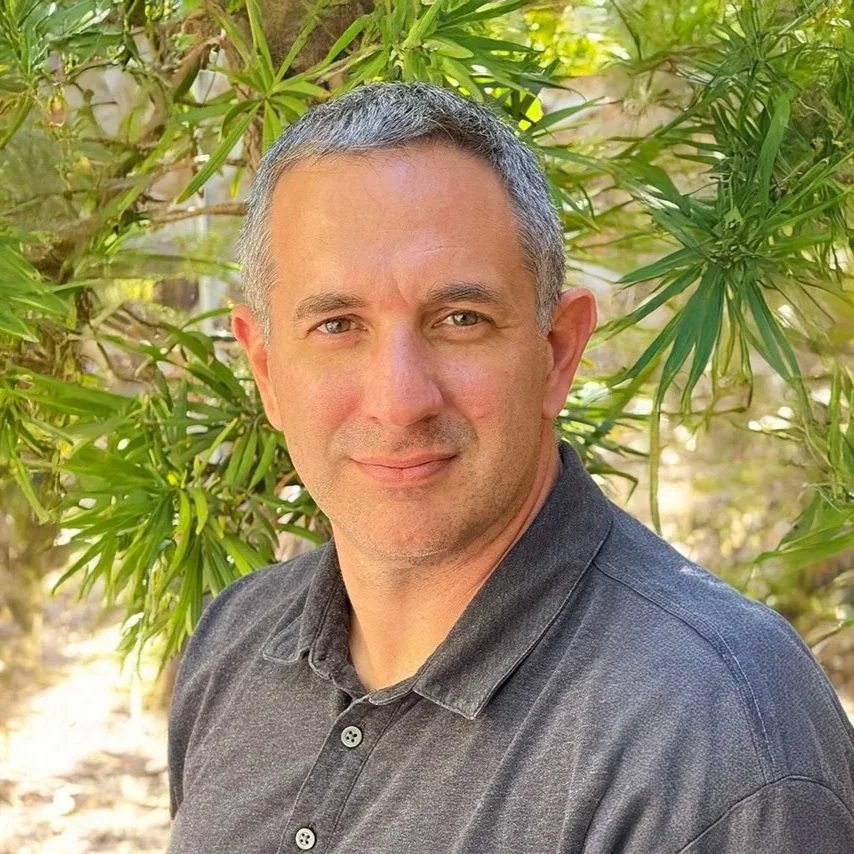
Dr Karem Roitman
Co-Founder and Managing Partner
London, UK
Karem is a global leader in organisational learning, leadership development, curriculum design and social inclusion, igniting curiosity and creativity in education and in business. With a DPhil in International Development from the University of Oxford, she has transformed systems across five continents, empowering teams to solve problems collaboratively and thrive in demanding environments.
She designs learning experiences that blend rigorous scholarship with a spirit of playful exploration, building environments where innovation can actually happen rather than being asked for.
Curriculum and teaching at scale
Karem authored Oxford University Press's Global Skills curriculum, part of the Oxford International Curriculum, now implemented in over 100 schools worldwide, and has trained more than 5,000 educators to cultivate critical thinking through real-world challenges.
As founder of Thinkers Meet Up, a virtual learning community for gifted students, she has built programmes serving over 500 families with 25 scholars, designed to nurture creativity and curiosity rather than accelerate through material.
Writing
Her most recent book, Seeking the Perfect World: A Critical Discussion of Global Challenges for the Bright and Curious (Routledge, 2024), is written to help young leaders approach global problems with intellectual clarity and human connection.
Practice
A sought-after speaker, Karem translates complex ideas into practical strategies for educators, leaders and organisations. Her first-principles approach, rooted in harmonising human potential with systemic goals, has driven measurable impact in contexts from Latin America to Asia and Africa.
She leads FPL's work in education. She is building the practice she has spent her career preparing for: inclusive, learning-driven systems where individuals and teams reach their full potential.
Craig Stritar
Co-Founder and Managing Partner
San Francisco Bay Area
Craig has spent more than two decades developing high velocity teams, beginning as a leader in military special operations and working since across healthcare, production and distribution, biotech, aviation, startups and Alaskan commercial fishing. For more than ten years his focus has been organizational transformation: developing people through perfect practice, and accelerating how fast learning spreads by taking leaders down to the physics of the work.
His approach was shaped by close work with healthcare innovator and MIT professor Steven Spear, and by Joseph S. Hood, the Fortune 500 chief executive who mentored his Lean Six Sigma master black belt.
The transformation record
At a 3,000 employee regional health system, Craig designed and installed a daily management system reaching every department across inpatient, outpatient and support services, and built the internal coaching capability that let teams sustain it. It held through subsequent executive leadership transitions, and was written up by the Lean Enterprise Institute and in AME Target Magazine. Transformation that outlasts the leaders who sponsored it is rare in healthcare.
With Steven Spear he also ran the first test in a healthcare setting of a real time issue reporting system, letting front line staff surface and escalate problems as they happened.
Research and translation
Craig is internationally recognized for uncovering the origins of takt time. Widely but mistakenly believed to have begun in Germany, the idea was developed in late nineteenth century Poland as a way of harmonizing human to human and human to machine interaction.
With Olga Stritar he translated Harmonic Leadership: The Collected Works of Karol Adamiecki and Henry Le Chatelier's Philosophy of the Taylor System, both 2023 and both the first English editions. All of that material is free in the Learning Center.
Practice
Squad leader, 3rd Ranger Battalion, US Army. BSc in Sociology, Arizona State University. Lean Six Sigma master black belt, and a California general contractor license, Class B General Building.
He leads FPL's work in construction, where the organizing idea is harmony rather than efficiency: lasting excellence comes from aligning rhythm, teamwork and human wellbeing.